Granite
Granite is a natural igneous stone prized for strength, character, and timeless appeal. Each slab is one-of-a-kind, offering organic movement and depth that adds lasting value and durability to kitchens and baths.
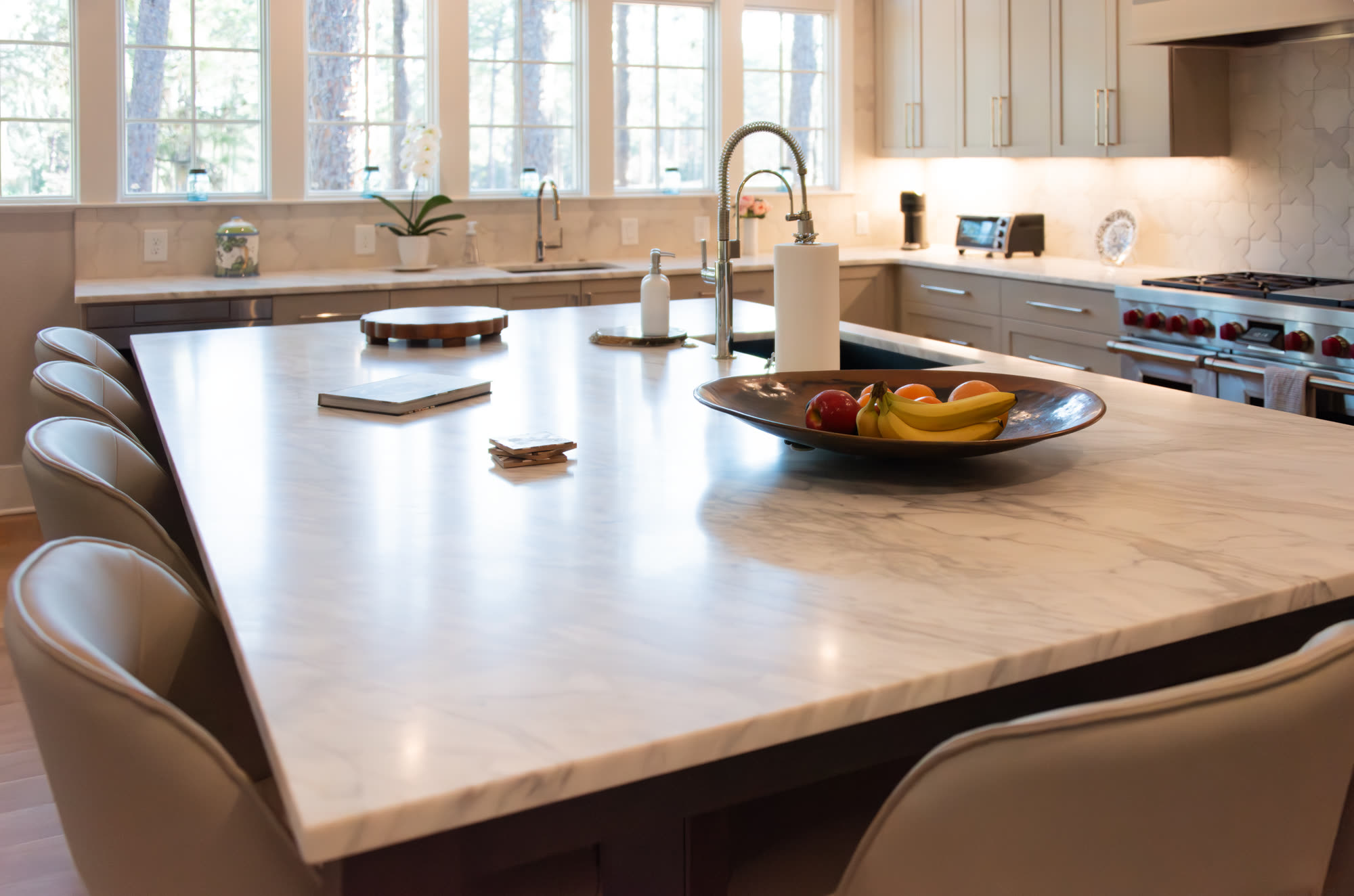
With endless inspiration from Pinterest and Houzz, it’s easy to fall in love with everything from granite and quartz to timeless marble.
So how do you choose the right countertop?
The truth is, there’s no wrong answer. Each surface offers its own beauty, durability, and character. The best choice comes down to how you live, your style, and what matters most to you. Below, we break down the differences to help you choose with confidence.
Granite is a natural igneous stone prized for strength, character, and timeless appeal. Each slab is one-of-a-kind, offering organic movement and depth that adds lasting value and durability to kitchens and baths.
Quartz countertops are engineered surfaces combining natural quartz with resins for consistency and strength. They offer a clean, modern look with reliable performance and minimal maintenance.
Marble is a classic natural stone known for elegance, softness, and refined movement. It brings a timeless, high-end aesthetic often associated with luxury kitchens and baths.
Quartzite is a natural stone offering the beauty of marble with strength closer to granite. It’s ideal for homeowners wanting dramatic movement with superior durability.
Sintered Stone is a solid-surface material designed for durability, consistency, and modern appeal. It offers a clean, uniform look ideal for contemporary kitchens and commercial spaces.
Granite is extremely durable and heat resistant, standing up well to daily cooking, impacts, and wear. With proper sealing and basic care, granite countertops can last for decades without losing performance or beauty.
Quartz is highly durable, scratch resistant, and non-porous. It holds up well to daily use and does not require sealing, making it a long-lasting choice for busy households.
Marble is softer than other stones and can etch or scratch over time. With mindful use and care, it ages gracefully and develops a natural patina many homeowners appreciate.
Quartzite is extremely hard and heat resistant, making it well suited for kitchens. When properly sealed, it offers excellent longevity even in high-use environments.
Sintered Stone is engineered for daily use, resisting chips, stains, and wear. It provides reliable performance over time with straightforward maintenance and repair options.
Granite forms deep within the earth from slowly cooled magma, resulting in dense crystalline structure. Quarried worldwide, each region produces unique mineral blends that influence color, pattern, and overall character.
Quartz surfaces are manufactured using crushed natural quartz and binding agents. This controlled process allows for uniform slabs with predictable color, pattern, and performance.
Marble forms when limestone undergoes heat and pressure, creating a smooth, crystalline structure. Quarried worldwide, each region produces distinctive veining and tonal variation.
Quartzite forms when sandstone is transformed under extreme heat and pressure. This process creates a dense, crystalline stone with exceptional strength and natural variation.
Sintered Stone is manufactured using mineral fillers and binding resins. This controlled production ensures consistent quality, color accuracy, and dependable structural integrity.
Granite offers wide color ranges from light neutrals to dramatic darks, often featuring bold veining, flecks, or flowing movement. Natural mineral variation ensures no two slabs are exactly alike.
Quartz offers extensive color options, from solid tones to marble-inspired designs. Patterns remain consistent from slab to slab, ideal for clients seeking uniformity and design control.
Marble is celebrated for flowing veining and subtle color transitions. Whites, creams, grays, and dramatic contrasts create movement that feels organic and sophisticated.
Quartzite features flowing veining, soft neutrals, and bold movement. Many slabs resemble marble while offering brighter whites, warm tones, or striking linear patterns.
Sintered Stone offers smooth, consistent coloring with subtle patterning. It’s ideal for designs that prioritize uniformity, clean lines, and a modern aesthetic.
Granite is naturally porous and requires periodic sealing to resist stains and moisture. Once sealed, it performs exceptionally well in kitchens and bathrooms with minimal ongoing maintenance.
Quartz is non-porous and never needs sealing. It resists stains, bacteria, and moisture, making it especially popular for kitchens, bathrooms, and high-traffic spaces.
Marble is porous and requires regular sealing to protect against stains and etching. Prompt cleanup and gentle care are essential to maintain its appearance.
Quartzite is porous and requires sealing to prevent staining. With proper sealing and care, it performs reliably while maintaining its natural beauty.
Sintered Stone is non-porous and does not require sealing. It resists moisture and bacteria, making it suitable for kitchens, baths, and commercial installations.
Granite pricing varies by rarity, origin, and pattern complexity. It offers excellent long-term value, balancing natural beauty, durability, and cost across a wide range of budgets.
Quartz is typically priced in the mid to high range. While not the least expensive option, its low maintenance and consistency often justify the investment over time.
Marble generally falls into the higher price range due to sourcing, demand, and fabrication. Its aesthetic appeal and timeless reputation often outweigh the added care requirements.
Quartzite is typically priced in the mid to high range due to quarrying and fabrication difficulty. Its durability and marble-like appearance make it a premium choice.
Sintered Stone is typically budget-friendly compared to natural stone. Its consistency, low maintenance, and durability make it a cost-effective surface solution.